Alliance for Innovation on Maternal Health Hypertension Quality Improvement
The AIM (Alliance for Innovation on Maternal Health) Hypertension Quality Improvement Project (QIP) is a quality improvement project that falls under the larger Maternal Safety Quality Improvement initiative sponsored by the Ohio Department of Health (ODH). The leading causes of pregnancy-related death in Ohio include cardiovascular and coronary conditions, infections, hemorrhage, preeclampsia and eclampsia, and cardiomyopathy, and a review of all pregnancy-related deaths from 2012-2016 found that over half of these deaths were preventable. In order to reduce the rate of preventable deaths attributed to hypertensive diseases of pregnancy in Ohio, targeted interventions at the provider, hospital, and system levels are required.
The AIM Hypertension QIP is administered by the Ohio Colleges of Medicine Government Resource Center (GRC), and in partnership with The Ohio State University’s Wexner Medical Center, Cleveland Clinic, University Hospitals Cleveland Medical Center, MetroHealth, and the Ohio Perinatal Quality Collaborative. The AIM Hypertension QIP seeks to address severe maternal morbidity and mortality by implementing best clinical practices and quality improvement tools to treat hypertensive diseases of pregnancy. In addition, through collaboration with clinical leaders and state partners, the project aims to prioritize a focus on health equity in order to achieve the goal of reducing disparities in maternal care.
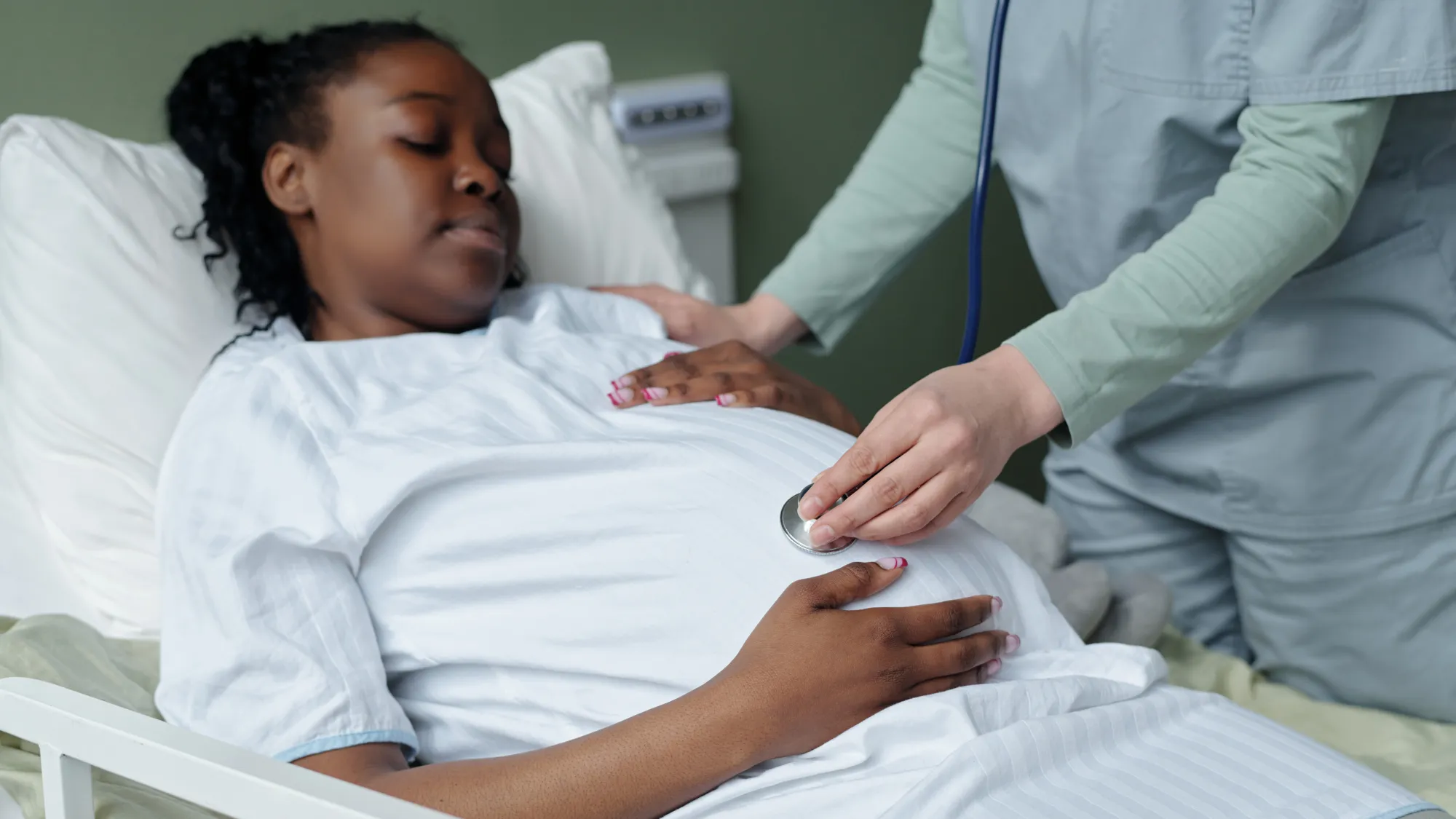
In the first phase of the project, an advisory group comprised of project partners developed a clinical change package based on best practices identified by the American College of Obstetricians and Gynecologists and the California Maternal Quality Care Collaborative to help establish practice guidelines for maternity hospitals in Ohio. The change package incorporated evidence-based interventions centering on the “4 R” domains established in the AIM patient safety bundles, including: Readiness, Recognition, Response, and Reporting. With the support of quality improvement coaches, participating sites tested strategies and interventions to implement best clinical practices, including blood pressure measurement, management, and treatment, recognition of maternal early warning signs, and effective, timely treatment of hypertensive disorders of pregnancy.
Data from each participating site’s Electronic Health Record (EHR) was submitted and analyzed on a monthly basis to track project progress and provide a feedback mechanism for each team to evaluate the performance of PDSA testing cycles. In aggregate, the cohort achieved improvements in all project data measures during the first year of the project.
Resources for Families and Moms-to-Be
In 2020, the initial wave of the AIM Hypertension QIP activity engaged 30 maternity hospitals, with outreach focusing on sites with the highest delivery volume. The second wave of the project, including 23 additional hospitals, began onboarding in summer 2021. Sites from both project waves will continue project activities through September 2022. Subsequent waves will leverage lessons learned during the initial phase regarding quality improvement activities and data submission and analysis.
Central Ohio Transit Authority (COTA)
Regional public transit provider for greater Columbus and Central Ohio; children under age 7 ride COTA buses for free.
- 33 N. High Street, Columbus, OH 43215
- (614) 228-1776
- Click to view the COTA website
Clintonville-Beechwold Community Resource Center
Provides free transportation (for residents of zip codes 43202, 43210, 43214, and 43224) to medical appointments if you call one week ahead.
- 3222 N. High Street, Columbus, OH 43202
- (614) 267-3050
- Click to view the Clintonville-Beechwold Community Resource Center website
Yellow Cab of Columbus
Private taxi service which utilizes contracted driver partners to transport guests throughout Columbus; open 24/7.
- 1989 Camaro Ave, Columbus, OH 43207
- (614) 444-4444
- Click to view the Yellow Cab of Columbus website
Shamrock Taxi
Private taxi service.
- 1417 Oakland Park Ave, Columbus, OH 43224
- (614) 784-8888
Moms2B
Community-based pregnancy program for low-income women established by The Ohio State University; provides transportation assistance to weekly sessions (via taxi).
- 921 Chatham Lane, Suite 300, Columbus, OH 43221
- (614) 292-1605
- Click to view the Moms2B website
Buckeye Health Plan Transportation
Provides Medicaid plans for eligible families which includes covered non-emergency transportation.
- 4349 Easton Way, Suite 300, Columbus, OH 43219
- (866) 549-8289
- Click to view the Buckeye Health Plan website
CareSource Insurance Transportation
Families who have CareSource Medicaid plans can schedule free rides to medical appointments (including WIC appointments); 30 one-way trips per 12 month period.
- 65 E State St, Suite 850, Columbus, OH 43215
- (800) 479-9502
- Click to view the CareSource Insurance Transportation website
Franklin County Department of Jobs and Family Services Transportation Services
Franklin county residents insured by Medicaid are eligible for free transportation to and from non-emergency medical appointments.
- 1721 Northland Park Ave, Columbus, OH 43229
- (614) 233-2381
- Click to view the Franklin County Department of Jobs and Family Services Transportation Services website
Non-Emergency Transportation Services
- 1722 Northland Park Ave, Columbus, OH 43230
- (614) 233-2381
- Click to view the Non-Emergency Transportation Services website
Pregnancy Related Transportation Services
- 1723 Northland Park Ave, Columbus, OH 43231
- (614) 233-2381
- Click to view the Pregnancy Related Transportation Services website
Title XX Medical Cab Transportation Services
- 1724 Northland Park Ave, Columbus, OH 43232
- (614) 233-2381
- Click to view the Title XX Medical Cab Transportation Services website
LEAP Transportation Services
Franklin county residents insured by Medicaid, who are students in the Learning, Earning and Parenting Program, are eligible for free transportation (via their LEAP Case Manager who coordinates with the Transportation Unit)
- 1725 Northland Park Ave, Columbus, OH 43233
- (614) 233-2381
- Click to view the LEAP Transportation Services website
Bus Passes for Medical Transportation Services
Franklin county residents insured by Medicaid are eligible for pre-paid bus passes for medical appointments (sent by mail), which are each good for one full day's travel on COTA buses.
- 1726 Northland Park Ave, Columbus, OH, 43234
- (614) 233-2381
- Click to view the Bus Passes for Medical Transportation Services website
Molina Transportation Services
Provides Medicaid plans for eligible families; offers emergency medical transportation, non-emergency medical transport and limited non-emergency non-medical transportation; members may also receive coverage for trips to pharmacies immediately following medical appointments
- 3000 Corporate Exchange Drive, Columbus, OH 43231
- (866) 642-9279
- Click the view the Molina Transportation Services website
Paramount Advantage Transportation Assistance
Provides Medicaid plans for eligible families and offers a Transportation Assistance Program, which covers vehicle transportation, public transit, and mileage reimbursement for a wide range of medical appointments (including prenatal & postpartum appointments, and prenatal education)
- 11590 Century Blvd, Suite 200, Cincinnati, OH 45246
- (866) 837-9817
- Click to view the Paramount Advantage Transportation Assistance website
Rides4Baby
Provides rides to medical appointments for qualifying pregnant women who have CareSource or Molina insurance; programs through The Ohio State University partnering with Smart Columbus and StepOne
- 410 W. 10th Ave, Columbus, OH 43210
- (614) 721-0009
- Click to view the Rides4Baby website
Lyft
Rideshare service.
Click to view the Lyft website
Uber
Rideshare service.
Click to view the Uber website
Bikes For All People (B4AP)
Community bicycle shop owned and operated by Church and Community Development for All People (CD4AP).
- 934 Parsons Ave, Columbus, OH 43206
- (614) 670-8685
- Click to view the Bikes For All People website
Adult 22+ High School Diploma Program
Program through the Ohio Department of Education, helps adults earn a high school diploma; program is free to adults who are over 22 years old, living in Ohio and do not have a diploma or GED
- Columbus, OH (multiple locations)
- Click to view the Adult 22+ High School Diploma Program website
Adult Diploma Program
Program through the Ohio Department of Education, provides job training and a new pathway for adults, ages 22+, to earn a high school diploma and industry credentials aligned to Ohio’s in-demand jobs
- Columbus, OH (multiple locations)
- Click to view the Adult Diploma Program website
Aspire
Provide free services for individuals who need assistance acquiring the skills to be successful in post-secondary education and training, and employment
- Columbus, OH (multiple locations)
- (833) 827-7473
- Click to view the Aspire website
Dress for Success
Non-profit organization that empowers women to achieve their goals through free-of-charge suiting, Career Center, and Employment Retention programs.
- 1204 N High St, Columbus, OH 43201
- (614) 291-5420
- Click to view the Dress for Success website
Eastland-Fairfield Career and Technical Schools
Adult Workforce Program offers dozens of professional courses and certification, offers employability skills, certifications, corporate training, and continuing education for those already in the workplace; Basic Police Officer Training, Dental assisting , HVAC , Medical assisting, Network and cybersecurity specialist, and Welding programs
- 4300 Amalgamated Pl, Groveport, OH 43215
- (614) 836-4530
- Click to view the Eastland-Fairfield Career and Technical Schools website
Goodwill
Provides access to and information on resources for gaining job skills, applying to jobs, navigating the job market, and more; runs the GFCLearnFree.org program
- Columbus, OH (multiple locations)
- Click to view the Goodwill website
Greenleaf Job Training Services, Inc.
Provide employment support services to persons with differing abilities; help you apply for jobs, learn how to wow employers during interviews, and give you support after you’ve been hired.
- 3397 N. High St, Columbus, OH 43202
- (614) 261-3110
- Click to view the Greenleaf Job Training Services, Inc. website
High School Equivalence (HSE)
Allows individuals who are 16+, are withdrawn from school, and have not earned a high school diploma to take a high school equivalency test (GED or HiSET).
OhioMeansJobs (Columbus – Franklin County)
Provide job seekers with career information, guidance, and access to education or training; provide access to computers for job searching, career counseling, assistance with writing a resume or learning how to interview for a job, and more; one-on-one assistance available through WIOA.
- 1111 E. Broad St, Columbus, OH 43205
- (614) 559-5052
- Click to view the OhioMeansJobs (Columbus – Franklin County) website
Ohio Technical Centers (OTC)
Provide post-secondary career and technical education that prepare learners for certificates, industry-recognized certifications, and state licensures.
- Columbus, OH (multiple locations)
- Click to view the Ohio Technical Centers website
U.S. Career Institute
Quality distance education at accredited and affordable online career training school; offers 25+ career certificate programs for as little as $585 and 7 associate degrees with tuition $1,989 per semester
- (866) 250-6851
- Click to view the U.S. Career Institute website
New Directions Career Center
- 199 E Rich St, Columbus, OH 43215
- 614-849-0028
- Click to view the New Directions Career Center website
Action for Children
Local child care resource and referral agency for Central Ohio which serves Columbus and Franklin County.
- 78 Jefferson Ave, Columbus, OH 43215
- (614) 224-0222
- Click to view the Action for Children website
Care.com
Online service which provides information and tools to help care seekers and care providers connect and make informed decisions.
Early Head Start Partnership Program @ Schoenbaum
Provides high-quality early education, along with comprehensive child development, health, nutrition, social, and other services to families who qualify.
- 175 E. 7th Ave, Columbus, OH 43201
- (614) 247-7488
- Click to view the Early Head Start Partnership Program @ Schoenbaum
Juggle
Babysitting app where families can seek out sitters who have been preapproved.
Ohio Department of Job and Family Services
ODJFS provides resources for finding child care, programs which can provide assistance paying for child care, and more.
- 1721 Northland Park Ave, Columbus, OH 43229
- (614) 233-2000
- Click to view the Ohio Department of Job and Family Services website
Baby and Me Tobacco Free
Click to view the Baby and Me Tobacco Free website
Nicotine Anonymous
Click to view the Nicotine Anonymous website
Ohio Tobacco Program
Click to view the Ohio Tobacco Program website
SmokefreeWomen
Click to view the SmokefreeWomen website
Start to Stop at CVS
Click to view the Start to Stop at CVS website
Freedom from Smoking
Click to view the Freedom from Smoking website
The Breathing Association Lung Clinic
Click to view The Breathing Association Lung Clinic website
Tobacco Free for Life
Click to view the Tobacco Free for Life website
American Heart Association
Asian American Community Services
Free clinic at OSU Thomas Rardin Family Medicine run by volunteer physicians and graduate students, specialize in caring for Asian American and Asian immigrant patients (including non-English speakers).
- 2231 N. High Street, Columbus, OH 43201
- (614) 220-4023
- Click to view the Asian American Community Services website
Capital Park - Heart of Ohio Family Health
Non-profit health center offering a variety of services at a reduced cost (on a sliding scale for non-insured).
- 2365 Innis Rd, Columbus, OH 43224
- (614) 416-4325
- Click to view the Capital Park - Heart of Ohio Family Health website
Columbus Free Clinic
Provides primary care, laboratory and imaging, pharmacy, specialty care in women's health, urology, physical and occupational therapy, psychiatry, law, and flu shots (with referral to orthopedics, cardiology, dermatology).
- 2331 N. High Street, Columbus, OH 43201
- (614) 404-8417
- Click to view the Columbus Free Clinic website
Columbus Public Health - Dental Clinic
Provides basic dental services (exams, x-rays, cleaning, fillings, extractions) and emergency services; must complete an application prior to coming into the clinic.
- 240 Parsons Ave, Columbus, OH 43215
- (614) 645-7487
- Click to view the Columbus Public Health - Dental Clinic website
Columbus Public Health - Physician's Free Clinic
Provides primary care by volunteer physicians within the Columbus Medical Association, specialty care by referral.
- 240 Parsons Ave, Columbus, OH 43215
- (614) 240-7430
- Click to view the Columbus Public Health - Physician's Free Clinic website
Columbus Public Health - Women's Health and Wellness Center
Provides a variety of women's services and screening for certain cancers and STIs, smoking cessation counseling, and other services; interpreters available; sliding fee scale for uninsured & accepts most insurances; must bring picture ID and household family information to each visit.
- 240 Parsons Ave, Columbus, OH 43215
- (614) 645-1859
- Click to view the Columbus Public Health - Women's Health and Wellness Center website
Columbus Neighborhood Health Center for the Homeless
Subsidiary of the CNHC which serves to ensure that people experiencing homelessness have access to comprehensive primary health care and mental health and substance abuse services at clinical care sites, homeless gathering sites, and shelters.
- 2780 Airport Dr, Suite 100, Columbus, OH 43219
- (614) 859-3267
- Click to view the Columbus Neighborhood Health Center for the Homeless website
Equitas Health
Provides primary care, high-impact HIV-related prevention, supportive and HIV/AIDS health navigation services for people living with or at risk of HIV, behavioral health, HIV/STI testing and more; services vary by location.
- Columbus, OH (multiple locations)
- (614) 299-2437
- Click to view the Equitas Health website
Hardin Clinic - Grace in the City
Provides free basic medical services for those at or below the federal poverty level, prescription counseling; can connect you with resources to help with basic physical needs and spiritual needs.
- 2052 Cleveland Ave, Columbus, OH 43211
- (614) 294-6238
- Click to view the Hardin Clinic - Grace in the City website
Helping Hands Health & Wellness Center
Offers reduced price TB Testing, free physicals, and free health care and social services on a walk-in basis for people 18+; faith-based clinic.
- 5100 Karl Rd, Columbus, OH 43229
- (614) 262-5094
- Click to view the Helping Hands Health & Wellness Center website
LifeCare Alliance - Wellness Clinic
Eight centers located throughout Franklin County which provide low-cost foot care, general health evaluations, nutrition education, and health education/fitness.
- Columbus, OH (multiple locations)
- (614) 437-2878
- Click to view the LifeCare Alliance - Wellness Clinic website
Linworth Free Clinic
Faith-based free clinic operating out of Linworth Road Center for low-income and/or Medicaid-eligible individuals; provides well and sick office visits, physicals, blood sugar testing, and referrals to other specialty health care providers/clinics
- 7260 Smoky Row Rd, Columbus, OH 43235
- (614) 442-5722
- Click to view the Linworth Free Clinic website
Lower Lights Christian Health Center
Delivers high-quality affordable services including primary care, OB/GYN, dental, vision, behavioral health, pharmacy, nutrition, and spiritual care; accepts Medicaid, Medicare, commercial insurance, and non-insured (sliding scale).
- Columbus, OH (multiple locations)
- (614) 274-1455
- Click to view the Lower Lights Christian Health Center website
Mount Carmel Healthy Living Center
Community health and wellness center which provides free holistic health and wellness programs including cooking and nutrition, diabetes prevention, exercise, wellness, and pre/postnatal care tips.
- 777 W State St, Building 2, Columbus, OH 43222
- (614) 234-4660
- Click to view the Mount Carmel Healthy Living Center website
New Life Community Health and Wellness
Volunteer run non-profit outreach center in Short North which seeks to serve those residents in-need in the area; provides hot breakfast every Sunday and a free clinic every other Sunday; men can also receive gently used business clothes and personal hygiene items
- 25 W 5th Ave, Columbus, OH 43201
- (614) 294-0134
- Click to view the New Life Community Health and Wellness website
Noor Community Clinic
Free medical clinic run by volunteer physicians, nurses, and students serving the uninsured and medically underserved; patients must bring photo ID and any recent medical records and prescriptions; clinic can provide prescriptions, referrals for lab and radiology tests, and referrals to OSU Wexner Medical Center (if approved for financial aid).
- 2331 N. High Street, Columbus, OH 43201
- (614) 516-3075
- Click to view the Noor Community Clinic website
Ohio Latino Health Network - Clinica Latina
Free health clinic for Spanish speaking and low-income individuals; first come-first served basis; provides basic primary care, as well as dental care on the first Tuesday of the month and laboratory testing when applicable; all staff speaks Spanish.
- 2331 N. High Street, Columbus, OH 43201
- (614) 349-1038
- Click to view the Ohio Latino Health Network - Clinica Latina website
Physicians Care Connection
Volunteer based charitable organization that helps coordinate care for uninsured and medically underserved or underinsured adults; operates Physicians Free Clinic and Dental Clinic in partnership with Columbus Public Health (and other organizations) on Monday evenings
- 240 Parsons Ave, Columbus, OH43215
- (614) 884-2441
- Click to view the Physicians Care Connection website
Planned Parenthood
Health center that provides high-quality affordable health care and sex education; interpreters available for English and Spanish (other languages available by telephone); provide birth control, HIV services, men and women's health care, primary care, abortion referrals, and more; currently offering many Telehealth services.
- Columbus, OH (multiple locations)
- (614) 222-3604
- Click to view the Planned Parenthood website
PrimaryOne Health
System of health center sites throughout Columbus and Franklin County which seeks to meet the needs of vulnerable, medically underserved, un/underinsured, and insured residents within the community; provides medical, dental, and vision services (and some other specialties) at a variety of locations.
- Columbus, OH (multiple locations)
- (614) 645-5500
- Click to view the PrimaryOne Health website
Southeast Healthcare
System of health center sites throughout the community that offers mental health, primary care, chemical dependency, health care, and homeless services
- Columbus, OH (multiple locations)
- (614) 360-0222
- Click to view the Southeast Healthcare website
The Breathing Association Lung Health Clinic
Provides medical and nursing services from a skilled professional staff; must meet income guidelines and have asthma, COPD, or other lung health needs
- 788 Mt. Vernon Ave, Columbus, OH 43203
- (614) 273-2843
- Click to view the The Breathing Association Lung Health Clinic website
The Health Center at Faith Mission (LSS)
Health center for homeless residents of Columbus who are living in shelters or on the street which provides medical, dental, vision, behavioral health and recovery services, pharmacy, health education and screening, and HIV prevention and care; can qualify for free services or Medicaid coverage based on low income and services are provided on a sliding fee scale.
- 245 N. Grant Ave, Columbus, OH 43215
- (614) 224-6617
- Click to view The Health Center at Faith Mission (LSS) website
The Women's Clinic of Columbus
Delivers vital reproductive health care, sex education, and information to women in the community; provides classes for mothers, free pregnancy tests and limited ultrasounds, and a baby boutique where mothers can spend "Mommy Money" earned from classes.
- 3242 E Main St. #2, Columbus, OH 43213
- (614) 237-2000
- Click to view The Women's Clinic of Columbus website
Victory Ministries Center of Hope
Multi-faceted material-needs assistance ministry offering immediate assistance for critical needs such as food (The Choice Pantry) and clothing (Clothing Room); provides free medical clinic (preventative health and vision) and counseling services.
- 3964 E Main Street, Whitehall, OH 43213
- (614) 252-2500
- Click to view the Victory Ministries Center of Hope website
Vineyard Free Health Clinics
Provides free medical, chiropractic, dental, and vision care for those 18+ up; medical clinic is walk-in and all other clinics are by appointment only.
- 6000 Cooper Road, Westerville, OH 43081
- (614) 259-5428
- Click to view the Vineyard Free Health Clinics website
Wellness on Wheels (WOW) @ Hilltop YMCA
Mobile wellness clinic which serves to work just like a normal doctor's office delivering primary care for everything from routine health needs, to minor illnesses and injuries, to the management of chronic health conditions.
- 2879 Valleyview Dr, Columbus, OH 43204
- (614) 566-9989
- Click to view the Wellness on Wheels @ Hilltop YMCA website
Women's Care Center
Provides free, confidential counseling, support and education for pregnant women; free pregnancy testing and ultrasounds help determine viability and dates (prenatal medical care and abortions not provided, but counseling on abortions available)
- Columbus, OH (multiple locations)
- (614) 251-0200
- Click to view the Women's Care Center website
All Peoples Fresh Market
Program of Community Development for All People’s healthy eating and living initiative which provides weekly opportunities for those in need to shop for free fresh produce, dairy, bread, and more.
- 945 Parsons Ave, Columbus, OH 43206
- (614) 445-7342
- Click to view the All Peoples Fresh Market website
- T-F 11am-5pm, SA 9am-1pm
Bishop Griffin Resource Center
Choice food pantry which offers food items once a month for families in need (3-day emergency supply) living in certain Columbus zip codes; no appointment necessary.
- 2875 E Livingston Ave, Columbus, OH 43209
- (614) 338-8220
- Click to view the Bishop Griffin Resource Center website
- W 9-11:30am, F 2-4:30pm
Brice United Methodist Church
Operates Brice Feeding Ministry which provides breakfast every Saturday 9-11:30am, fresh produce every Saturday morning (while supplies last), and a 4-day supply of food for families once a month for families living in certain zip codes around the Franklin County area.
- 3610 Brice Rd, Brice, OH 43109
- (614) 866-3025
- Click to view the Brice United Methodist Church website
- SA 9-11:30am
Broad Street Presbyterian Church
Operates Broad Street Food Pantry which provides fresh produce, dairy, protein, and shelf-stable food once every 30 days to eligible neighbors.
- 760 E. Broad St, Columbus, OH 43205
- (614) 908-3901
- Click to view the Broad Street Presbyterian Church website
- M-F 9-11am & one SA/month 9-11am
Champion Avenue Food Pantry (LSS)
LSS operates food pantry for Franklin County (& Delaware County) residents to provide food to families in need; orders can be placed online and picked up at a chosen date/time and walk-in produce distributions are also available.
- 1460 S. Champion Ave, Columbus, OH 43206
- (877) 577-6325
- Click to view the Champion Avenue Food Pantry (LSS) website
- M 11am-1pm, T-F 1-4pm
Columbus Dream Center
Serves hundreds of hot meals/to-go meals each week donated by organizations and churches across Columbus; now includes pre-packed lunch distribution and breakfast bags.
- 38 W Greenwood Ave, Columbus, OH 43201
- (614) 783-4886
- Click to view the Columbus Dream Center website
- M/F 9:30-10am & 7-7:30pm, T/TH 7-7:30pm, W 9:30-10am & 12-12:30pm
Community Food Pantry Canal Winchester
Pantry operates on an appointment only basis servicing those living in surrounding areas; clients can use the pantry twice each month and receive five days of food for each documented member of their household.
- 80 Covenant Way, Canal Winchester, OH 43110
- (614) 834-4700
- cwhumanservices.org/food-pantry
- M/T/W 1-3pm, except on 2nd and 4th W of month pantry open 4-6pm instead
Community Resource Center
Choice food pantry through CRC Family Services that serves Clintonville and surrounding communities through choice food pantry, weekly produce distributions, community meals, and more; must provide proof of address.
- 14 W Lakeview Ave, Columbus, OH 43202
- (614) 268-8118
- www.clintonvillecrc.org/family-services
- M-F 12-4pm
DCC Food Pantry
Food pantry operates by appointment only out of the Dayspring Community Church; can schedule through the HandsOn Central Ohio food line and enter the rear of the church at your scheduled time to pick up food.
- 3919 Brice Rd, Canal Winchester, OH 43110
- (614) 341-2282
- food.dayspringonline.net
Dublin Food Pantry
Food pantry servicing the Dublin School District and Dublin, OH which provides monthly assistance for those in need with curbside pickup of prepackaged groceries and other items.
- 81 W Bridge St, Dublin, OH 43017
- (614) 889-6590
- www.dublinfoodpantry.org/get-food
- M 5:30-7:15pm, T 10-11:45am, TH 4-6:15pm
East Side Grace Food Pantry
Agent of the Mid-Ohio Food Bank that operates out of the church 2 days each week, one day for produce and another for full pantry; not restricted by zip codes.
- 7510 East Broad St, Blacklick, OH 43004
- (614) 861-5810
- www.eastsidegrace.org/foodpantry
- M & TH 11:30am-1:30pm
Faith Mission Ohio (LSS)
Community kitchen that serves 3 free meals each day to housing/food insecure residents of Franklin County through Lutheran Social Services.
- 217 N. Grant Ave, Columbus, OH 43215
- (614) 224-6617
- lssnetworkofhope.org/faithmission/services/food
Gladden Food Pantry
Provides emergency food assistance (monthly for groceries and daily for produce) for residents of surrounding zipcodes.
- 318 S Glenwood Ave, Columbus, OH 43223
- (614) 228-2498
- gladdenhouse.org/food-pantry
- M-F 11am-5pm
Greater Groveport Food Pantry
Provides emergency food assistance with a prepackaged assortment of perishable and non-perishable food items (based on household size); currently offering curbside pick-up due to COVID-19.
- 595 Cherry St, Groveport, OH 43125
- (614) 836-7652
- www.groveportfoodpantry.com
- Thursday by appointment
Heart Food Pantry
Serves hungry neighbors with family income at or below Emergency Food Assistance Income Level based on household size; can shop once a week and no appointment is necessary; currently offering curbside pick-up only due to COVID-19.
- 6475 E Main St, Ste 101, Reynoldsburg, OH 43068
- (614) 604-8878
- www.heart-market.org/need-food
- T/TH 2-7pm, W/F 10am-2pm
Heart to Heart Food Pantry
Pantry operated by the First Community Church which serves clients on a monthly basis and provides canned goods, groceries, produce, and some non-food items.
- 1320 Cambridge Blvd, Columbus OH 43212
- (614) 488-0681 OR hearttoheart@FCchurch.com
- h2h.fcchurch.com/about
- T/TH 9am to 12 pm
Hope Food Pantry
Choice pantry where clients are free to select their own food in a grocery setting with the help of volunteers, including meat, dairy, bread, produce, and non-perishable items; currently offering drive-thru pick-up only due to COVID-19.
- 3360 Patriot Blvd, Columbus, OH 43219
- (614) 316-7030
- hopefoodpantry.com
- TH 10am-1:30pm
Holy Family Soup Kitchen & Food Pantry
Ministry operated through Holy Family Church which offers food to homeless and low-income citizens across West Columbus.
- 57 S. Grubb St, Columbus, OH 43215
- (614) 461-9444
- www.holyfamilycolumbus.org/hfsk
- M-F 10:30am-12:00pm
Kroger Community Pantry
Operates as a choice food pantry supported by Mid-Ohio Foodbank and is open to the community throughout the week for those who make less than 200% of the Federal Poverty Level based on household size; no appointment needed.
- 3960 Brookham Drive, Grove City, OH 43123
- (614) 277-3663
- www.midohiofoodbank.org/get-help/kroger-pantry
- T/TH/F 8:30am-12pm, W 8:30am-12pm & 5-7pm, SA 8:30am-1:30pm
Livingston United Methodist Church Food Pantry
Food pantry operated by the parish which provides food to clients 3 mornings each week in the church parking lot, where volunteers bring out the food and load it into the clients cars.
- 200 E Livingston Ave, Columbus, OH 43215
- (614) 224-2006
- www.livingstonchurch.org/outreach
- T/TH/SA 8:30-11am
LSS Mobile and Produce Distribution
Lutheran Social Services operates mobile distribution locations which bring the food pantries to the people, where they can select items for well-balanced and nutritious meals; also operates produce distribution locations where fresh fruits and vegetables are distributed monthly to families in need (no appt necessary).
- Columbus, OH (multiple locations)
- (877) 577-6325
- lssnetworkofhope.org/foodpantries/services/mobile-and-produce-distributions
FreskTrak - MidOhio Foodbank
Overarching food resource organization for Central Ohio, member of Feeding America; provides information on local resources for each county, operates the Kroger Community Pantry and provides SNAP assistance.
- 3960 Brookham Drive, Grove City, OH 43123
- (614) 277-3663
- www.midohiofoodbank.org/get-help/get-food
Neighborhood Services, Inc.
Operates choice pantry Monday-Thursday where residents in surrounding neighborhoods can get food assistance (5-day supply) once per month.
- 1950 North 4th St, Columbus, OH 43201
- (614) 297-0592
- www.neighborhoodservicesinc.org/what-we-do
- M-TH 10am-1pm
New Life Community Outreach
Offers hot breakfast every Sunday morning to neighbors; also distributing sack lunches.
- 25 W. 5th Ave, Columbus, OH 43201
- (614) 294-0134
- www.newlifecolumbus.com
- SU 7-8am
NNEMAP Food Pantry
Offers food and other services to qualifying individuals and families who live in the City of Columbus, no matter their zip codes; customers may visit pantry once each week if they meet federal income guidelines.
- 677 E. 11th Ave, Columbus, OH 43211
- (614) 297-0533
- www.nnemappantry.org
- M/T/W/F 9am-12pm, TH 3-7pm, and SA 10am-1pm
Open Table Food Pantry
Food pantry operated by Grace Point Community Church twice per month which offers a hot meal and groceries to all who need it.
- 2393 Peachblow Rd, Lewis Center, OH 43035
- (740) 548-7718
- www.gracepoint.cc/opentable
- 2nd Tu and 4th TH of the month 6:30-8pm
Reynoldsburg Helping Hands
Food pantry that helps Reynoldsburg families, by appointment only. Provide non-perishable items, personal hygiene items, and perishable goods to people living in the 43068 zip code.
- 7356 E Main St, Reynoldsburg, OH 43068
- (614) 868-9394
- www.facebook.com/pages/Reynoldsburg%20Helping%20Hands/146897908688047
- T/W/F/SA 10am-12pm
Salvation Army, Central Ohio
Central Ohio branches of the Salvation Army seek to help Columbus residents meet their basic needs; operates sever food pantries, mobile food canteens, and a lunch program (produce distribution currently suspended)
- 966 Main St, Columbus, OH 43205
- (614) 253-6811
- easternusa.salvationarmy.org/southwest-ohio/central-ohio/alleviate-hunger
SNAP
Supplemental Nutrition Assistance Program, called Food Assistance in Ohio, which helps low-income families and individuals meet their basic nutritional needs; benefits distributed through Ohio Direction card; current guidelines requires household income to be at or below 130% of the Federal Poverty guidelines based on household size
St. Stephens Community House
Food pantry operated through the food and nutrition center of St. Stephens which provides food to family in need.
- 1500 E 17th Ave, Columbus, OH 43219
- (614) 294-6347
- www.saintstephensch.org/neighborhood-services
- M/W/F 12-3pm, T/TH 3-6pm
Veterans Food Bank
Operates food bank through Military Veterans Resource Center which can provide 15 meals/month per family member
- 4889 Sinclair Rd, Ste 104, Columbus, OH 43229
- (614) 636-4634
- milvetsrc.org/veterans-food-bank
- M-F 8:30am-4pm
Vineyard Columbus - Food Pantries
Operates two food banks in Columbus which serve certain zip codes and members of Vineyard.
- Columbus, OH (multiple locations)
- (614) 890-0000
- www.myvc.info/need-help/food
WIC
Supplemental nutrition program for women (pregnant, postpartum and breastfeeding), infants and children up to 5 years old; provides nutrition education, nutritious foods, and breastfeeding education and support .
- 240 Parsons Ave, Columbus, OH 43215
- (614) 645-7280
- www.columbus.gov/publichealth/programs/Women-Infants-and-Children-WIC
- M/W/TH 7:30am-5pm, T 9am-7pm, F 7:30-11:30am
Worthington Resource Pantry
Offers car side distribution of food for residents of certain zip codes two times per month, which includes access to both full shopping days as well as produce & bread quick shop days.
- 6700 Huntley Rd, Columbus, OH 43229
- (614) 985-1766
- www.worthingtonresourcepantry.org/get-help
- M 10am-2pm, W 3-7:00pm, SA 10am-12pm
Family and Youth Law Center
Provide free legal advice to those without an attorney in specific situations; run by Capital University Law School.
- 303 E. Broad St, Columbus, OH 43215
- (614) 236-6730
- Click to view the Family and Youth Law Center website
First English Lutheran Church Legal Clinic
Volunteer lawyers are present the fourth Tuesday of each month from 5:30-7:30pm through the First English Lutheran Church ministries.
- 1015 E Main St, Columbus, OH 43205
- (614) 252-3191
- Click to view the First English Lutheran Church Legal Clinic website
Franklin County Law Library
Provides access to legal research guides, legal forms, self-help resources, and on-site free legal clinics from providers around Columbus.
- 369 S. High St, Columbus, OH 43215
- (614) 525-4971
- Click to view the Franklin County Law Library website
Legal Aid Society of Columbus (LASC)
Targeted towards improving the lives of low-income (and senior) residents of Columbus through legal aid and advocacy and providing them with high quality legal representation if necessary.
- 1108 City Park Ave, Ste 101, Columbus, OH 43206
- (614) 224-4514
- www.columbuslegalaid.org
Ohio Crime Victim Justice Center
Provide free legal assistance to crime victims to protect and enforce their rights.
- P.O. Box 369, Powell, OH 43065
- (614) 848-8500
- www.ocvjc.org
Ohio Legal Help
Nonprofit that provides plain language legal help information, interactive self-help tools and connections to local legal and community resources that can help people resolve their legal issues.
- 88 E Broad St, Columbus, OH 43215
- (866) 791-8362
- www.ohiolegalhelp.org
Southeastern Ohio Legal Services (SEOLS)
Provides legal assistance for people who cannot afford an attorney through representation and easy-to-understand information about your legal rights.
- 1108 City Park Ave, Ste 200, Columbus, OH 43206
- (614) 221-7625
- www.seols.org
Alcohol, Drug and Mental Health (ADAMH)
National Alliance on Mental Illness (NAMI)
Mental Health America of Ohio
Ohio Suicide Prevention Foundation
NetCare Access
Center for New Beginnings Shelter & Services
Program offering free, confidential emergency shelter and basic services to community members who are victims of a domestic violence situation and need help.
- Columbus, OH
- (740) 349-8729
- thewoodland.org/center-for-new-beginnings
Central Ohio Community Land Trust (COCLT)
A nonprofit organization that creates and preserves affordable housing in the Columbus, Ohio area; can find home listings on their website; COCLT is a subsidiary of Central Ohio Community Improvement Corporation (COCIC).
- 845 Parsons Ave, Columbus, OH 43215
- (614) 724-5263
- www.coclt.org
City of Columbus Code Enforcement Division
Administrative sector of the Department of Development which seeks to improve the quality of life in Columbus neighborhoods through implementation and enforcement of the City's Housing, Zoning, Graphics, Health, Sanitation, and Safety Codes.
- 111 N. Front St, Columbus, OH 43215
- (614) 645-2202
- www.columbus.gov/development/Code-Enforcement
City of Columbus Housing Division
Operates a number of programs which provide assistance to current/future homeowners; preserves and produces housing through collaboration with federal, state, and local government housing agencies for neighborhood investment; programs are available to eligible residents of Columbus
- 111 N. Front St, Columbus, OH 43215
- (614) 645-7896
- www.columbus.gov/development/Housing-Division
Coalition on Homelessness & Housing in Ohio (COHHIO)
COHHIO is a coalition of organizations and individuals committed to ending homelessness and to promoting decent, safe, fair, affordable housing for all, with a focus on assisting low-income and special needs populations; supports Ohio residents and organizations seeking guidance on a variety of housing issues: landlord-tenant law, the Fair Housing Act, tenant organization and affordable housing preservation.
- 175 S. 3rd St, Ste. 580, Columbus, OH 43222
- (614) 280-1984
- cohhio.org/programs
Columbus Coalition for the Homeless (CCH)
Education, advocacy, and empowerment for homeless people and programs; sells monthly Street Speech newspaper in Columbus produced by the Coalition, sold by licensed vendors who have experience of homelessness.
- 89 W. Park Ave, Columbus, OH 43211
- (614) 228-1342
- www.columbushomeless.org
Columbus Metropolitan Housing Authority (CMHA)
Helps people access affordable housing through collaborative partnerships to develop, renovate, and maintain housing; promote neighborhood revitalization; and assist residents in accessing needed social services; offers Housing Choice Voucher program, Public Housing, and more.
- 880 E. 11th Ave, Columbus, OH 43215
- (614) 421-6000
- cmhanet.com/Home/About
Columbus Public Health - Healthy Homes
Offers phone consultations, mandatory lead inspections for homes with lead poisoned children, free HEPA vacuum loan (for hazard clean-up), presentations to Columbus community organizations, neighborhood associations, day care centers, and school staff.
- 240 Parsons Ave, Columbus, OH 43203
- (614) 724-6000
- www.columbus.gov/publichealth/programs/healthy-homes
Columbus Scholar House
Housing program for students who are 18 years of age, low-income, the custodial parent of at least one child, and enrolled in a degree-seeking program at an accredited college or university maintaining a 2.5 GPA; housing on N. 17th St. located centrally to many colleges and universities in Columbus
- Columbus, OH 43203
- (614) 545-3055
- cpoimpact.org/scholarhouse.aspx
Columbus Urban League
Provides a variety of programming, including Homebuyer Education workshops and Rental Fair Housing Discrimination Prevention (including tenant and landlord mediation).
- 780 Mt. Vernon Ave, Columbus, OH 43215
- (614) 257-6300
- www.cul.org/our-initiatives
Community Housing Network
CHN has developed and manages more than 1,200 apartments; provides rent subsidies to an additional 400 residents renting from private landlords and provides all customary property management.
- 1680 Watermark Dr, Columbus, OH 43205
- (614) 487-6700
- www.chninc.org
Community Properties of Ohio (CPO)
Property management company offering a range of affordable housing opportunities for residents; provide innovative resident programs to promote long-term goals and self-sufficiency.
- 910 E. Broad St, Columbus, OH 43235
- (614) 253-0984
- www.cpoms.org/about
Community Shelter Board
Provides homelessness prevention, shelter, street outreach, rapid re-housing, and permanent supportive housing ; Home4Good program.
- 355 E. Campus View Blvd, Ste 250, Columbus, OH 43229
- (614) 221-9195
- www.csb.org/about-us
Habitat for Humanity MidOhio
Provides opportunities for Central Ohio families to live in homes that are safe, decent, and affordable; offer two main programs: homeownership for first-time homeowners and home repair program for current homeowners for qualifying families and individuals.
- 6665 Busch Boulevard, Columbus, OH 43219
- (614) 484-1966
- www.habitatmidohio.org/what-we-do
Homeport
Develops quality, affordable homes and creates strong communities; committed to closing the housing gap for low-to-moderate income individuals, families, and seniors making 100% or less of the Area Median Income (AMI), with a special emphasis on residents making 60% AMI or less.
- 3443 Agler Rd, Columbus, OH 43228
- (614) 221-8889
- www.homeportohio.org/what-we-do
Homes on the Hill - Columbus Development Corporation
Not-for-profit organization that develops affordable housing in southwestern Franklin County; offers homebuying and homeownership education programs (in English and Spanish).
- 3659 Soldano Blvd, Columbus, OH 43215
- (614) 275-4663
- hoth-cdc.org/index.htm
Housing and Urban Development (HUD)
U.S. Department of Housing and Urban Development provides housing, fairness, and rental assistance resources.
- 200 N High St, Columbus, OH 43201
- (614) 469-5737
- resources.hud.gov/#property-dialog
Huckleberry House
Offer a variety of programs to support young people and families struggling with homelessness, substance abuse, poverty, and violence.
- 1421 Hamlet St, Columbus, OH 43223
- (614) 294-8097
- huckhouse.org/programs
Lower Lights Ministries
Ministry focused on meeting the needs of Franklinton families; offers holistic community development and services including supportive housing for recently incarcerated women, women struggling with addiction, and low-income families & individuals, and individual mentoring.
- 1066 Bellows Avenue, Worthington, OH 43085
- (614) 228-3855
- www.lowerlights.org
Lutheran Social Services (LSS)
Faith-based organization that address core societal issues of food, shelter, safety, and healing through various programs and services; very useful and user-friendly resource database available on website
- 500 W Wilson Bridge Rd, Columbus, OH 43209
- (614) 228-5200
- lssnetworkofhope.org/services
Move to Prosper
Program that makes affordable rental housing available in neighborhoods that offer access to opportunities (good schools, safe neighborhoods, employment and more), so that families at all income levels have a chance to live in a community of opportunity.
- Ebner Building, 1040 College Ave, Columbus, OH 43215
- www.movetoprosper.org/the-project
Ohio Housing Finance Agency (OHFA)
Facilitates the development, rehabilitation and financing of low- to moderate-income housing; programs help first-time homebuyers, renters, senior citizens, and others find quality affordable housing that meets their needs.
- 57 E Main St., Columbus, OH 43205
- (614) 466-7970
- www.ohiohome.org/programs.aspx
Salvation Army, Central Ohio
Central Ohio branches of the Salvation Army seek to help Columbus residents meet their basic needs; offer Housing First program and utility/rent assistance.
- 966 Main St, Columbus, OH 43215
- (614) 253-6811
- easternusa.salvationarmy.org/southwest-ohio/central-ohio/provide-housing
Southeast Inc. Friends of the Homeless Program
Provides support to people experiencing homelessness through emergency shelter, transitional and supportive housing programs.
- 924 E Main St, Columbus, OH 43201
- (614) 360-0251
- www.fohcolumbus.com
Star House
Agency that operates Central Ohio's only drop-in center for youth, ages 14-24, who are experiencing homelessness; open 10:30-2pm.
- 1220 Corrugated Way, Columbus, OH 43215
- (614) 274-7000
- www.starhouse.us/help
The Open Shelter
Advocacy center and day services shelter for homeless and marginally-housed people; provide crucial needs directly to those in crisis; Coordinated, supportive services are also provided, directly or by referral
- 61 E. Mount St, Columbus, OH 43215
- (614) 222-2885
- theopenshelter.org
YWCA Columbus
Committed to creating a community of safety, support and stability through emergency shelter and long-term supportive housing.
- 65 S. 4th Street, Columbus, OH 43215
- (614) 224-9121
- www.ywcacolumbus.org
Baptists for Life of Central Ohio
Operates Maternity Resource Center which provides clothing and baby items for pregnant mothers.
- 3417 Palmetto St, Columbus, OH 43204
- (614) 272-7038
- www.bflco.org/maternity-resource-center
- W 6:30-7:30pm, SA 10am-12pm
Birthright
Charitable organization committed to providing support to any woman who is pregnant or thinks she might be pregnant; provides maternity and baby items, as well as access to various resources.
- 2453 W. Mound St, Columbus, OH 43204
- (614) 221-0844
- birthright.org/columbusohmain
- M-F 10am-1:30pm
Center of Hope Victory Ministries
Operates Clothing Room which is open to the public and allows clients to obtain clean, gently-used seasonal clothing at no cost.
- 3964 E Main St, Columbus, OH 43213
- (614) 252-2500
- www.victorycoh.org/What-We-Do/Emergency-Services
- M-F 12:30-3pm
Little Bottoms Free Store
Operates Little Bottoms Free Store where mothers can obtain diapers, wipes, and baby clothes at no cost; must become member of church to access.
- 89 W Park Ave, Columbus, OH 43222
- (614) 696-4099
- www.littlebottoms.org
- Th 6:30pm-8pm
Charity Newsies
Charity organization whose mission is to provide school uniforms to those in need.
- 4300 Indianola Ave, Columbus, OH 43214
- (614) 263-4300
- charitynewsies.org
- M-F 9am-12:30pm
CHLOE
Charitable organization which provides resources, classes, and supplies to young moms; operates the Chloe’s Closet program for moms to receive supplies.
- 739 S Yearling Rd, Columbus, OH 43213
- (614) 531-9298
- chloeinc.org
- 1st and 3rd T 6-8:30pm
Cloth Diaper Connection
Program with goal of making cloth diapers accessible to low-income families in the community; lend families a set of 24 cloth diapers of various sizes.
- PO Box 14244, Columbus, OH 43214
- (614) 398-1665
- clothdiaperconnection.org
Community Development for All People - Free Store
Operates the Free Store where clients can receive gently used clothing (and household items) at no cost.
- 946 Parsons Ave, Columbus, OH 43206
- (614) 443-1713
- 4allpeople.org/FreeStore
- M-F 9am-2pm; by appointment
Dress for Success
Non-profit organization that empowers women to achieve their goals through free-of-charge suiting, Career Center, and employment retention programs.
- 1204 N High St, Columbus, OH 43201
- (614) 291-5420
- columbus.dressforsuccess.org
- M-F 8:30am-4:30pm
God's Hygiene Help Center
Non-profit which provides hygiene products, women’s products, cleaning products, and baby supplies to those in need once per month at no cost.
- 1402 Oakland Park Ave, Columbus, OH 43224
- www.godshygiene.org
- T/TH 10am-1pm
Goodwill
Organization which operates retail thrift stores across the country, where clients can shop for clothing, household items, toys, appliances, electronics, and more at very low prices.
- Columbus, OH (multiple locations)
- (614) 294-5181
- www.goodwillcolumbus.org
- M-SA 9am-9pm, SU 10am-6pm
Joseph's Coat of Central Ohio
Provides clothing and household items to individuals and families in need regardless of income or geographic location.
- 240 Outerbelt St, Ste 5, Columbus, OH 43213
- (614) 863-1371
- www.josephs-coat.org
- T/TH 6pm-8pm, SA 9am-12pm
Westside Free Store Ministries
Faith-based charitable organization which allows guests to shop for clothes and small household items several days a week, and receive a lunchtime meal each Saturday.
- 61 S. Powell Ave, Columbus, OH 43204
- (614) 351-5480
- westsidefreestore.org
- M 9:30-11:45am, TH 3-5:15pm, SA 11am-1:15pm
St. Vincent de Paul Microloan Program
Provide individuals with an effective alternative to high interest predatory loans, consumer protection information and financial mentorship by trained members of Saint Vincent de Paul.
- Columbus, OH 43215
- 614-221-3554
- www.svdpcolumbus.org/microloan_mission
Ohio Saves
Campaign coordinated by the nonprofit Consumer Federation of America (CFA) and is dedicated to helping individuals save money, reduce debt, and build wealth.
- Washington, DC 20006
- 202-387-6121
- americasaves.org/local-campaigns/ohio-saves
Apprisen Financial Counseling
Offers an array of services and resources designed to help you achieve financial health and wealth.
- Gahanna, OH 43230
- 1-800-355-2227
- www.apprisen.com
Columbus Urban League
Community‐based, non‐profit, advocacy organization.
- Columbus, OH 43203
- 614-257-6300
- www.cul.org
GreenPath
National nonprofit focused on financial wellness for everyone.
- Farmington Hills, MI 48331
- 866-476-7284
- www.greenpath.com
National Foundation for Credit Counseling (NFCC)
- 800-388-2227
- www.nfcc.org/what-we-offer
Franklin County Public Health - Animals and Bugs
myfcph.org/environmental-health/animals-bugs
Franklin County Public Health - Plumbing & Medical Gas
myfcph.org/environmental-health/plumbing
Franklin County Public Health - Public Health Nuisances
myfcph.org/environmental-health/community-environmental-health/nuisance-conditions
Columbus Division of Fire Smoke Detector Hotline
www.columbus.gov/public-safety/fire/programs-and-training/Smoke-Alarms-Save-Lives
Columbus Public Health Healthy Homes
Baby & Me Tobacco Free
Evidence based, smoking cessation program created to reduce the burden of tobacco on the pregnant and postpartum population.
- 240 Parsons Ave, Columbus, OH 43215
- (614) 645-2135
- babyandmetobaccofree.org
CPH Women's Health Family Planning Center
Provides a variety of women's services and screening for certain cancers and STIs, smoking cessation counseling, and other services; interpreters available; sliding fee scale for uninsured amp; accepts most insurances; must bring picture ID and household family information to each visit.
- 240 Parsons Ave, Columbus, OH 43215
- (614) 645-1850
- www.columbus.gov/publichealth/programs/Women-s-Health,-Family-Planning
Lower Lights Christian Health Center
Nonprofit community health center, accepts Medicaid, Medicare, private insurance, and those who are uninsured (on a sliding fee scale); provides OB/GYN services.
- Columbus, OH (multiple locations)
- (614) 274-1455
- llchc.org
Moms2B
Innovative, community-based pregnancy program for low-income women established by The Ohio State University; provides weekly education and support sessions to high-risk pregnant women to promote healthier lifestyle choices and link them with resources.
- Columbus, OH (multiple locations)
- (614) 292-1605
- wexnermedical.osu.edu/obstetrics-gynecology/pregnancy/moms2b
Nationwide Children's Hospital (NCH) Teen Pregnancy Program (TaP)
Provides prenatal and postpartum care for pregnant women up the age of 21 and 6 months of age; participate in Centering Pregnancy (group care) with other pregnant teens.
- 380 Butterfly Gardens Dr, Columbus, OH 43215
- (614) 355-6350
- www.nationwidechildrens.org/specialties/teen-and-pregnant-program
Ohio Tobacco Quit Line - Pregnancy Program
Provides free telephone tobacco cessation service, offering help and support to pregnant women by coaches trained to address the unique needs of pregnant tobacco users
Planned Parenthood
Health center that provides high-quality affordable women's health care and pregnancy services; interpreters available for English and Spanish (other languages available by telephone); currently offering many Telehealth services.
- 18 E. 17th Ave, Columbus, OH 43201
- (614) 222-3604
- www.plannedparenthood.org/health-center/ohio/columbus/43201/north-columbus-health-center-2717-91230
PrimaryOne Health
System of health center sites throughout Columbus and Franklin County which seeks to meet the needs of vulnerable, medically underserved, un/underinsured, and insured residents within the community; offers various OB/GYN services at several locations.
- Columbus, OH (multiple locations)
- (614) 645-5500
- www.primaryonehealth.org/services
Wellness on Wheels (WOW): Women's Health & Prenatal Care
Mobile wellness clinic which serves to work just like a normal doctor's office delivering prenatal, postpartum, and women’s health services.
- Columbus, OH (multiple locations)
- (614) 566-9989
- www.ohiohealth.com/community-health/wellness-on-wheels
Alive in My Heart
Supports families impacted by pregnancy and infant loss by connecting them to each other and community resources in Central Ohio.
- P.O. Box 2631, Columbus, OH 43216
- aliveinmyheart.org
Birthright
Charitable organization committed to providing support to any woman who is pregnant or thinks she might be pregnant; provides access to various resources.
- 2453 W Mound St, Columbus, OH 43204
- (614) 221-0844
- birthright.org/columbusohmain
Catholic Social Services
Faith-based organization which helps families through difficult problems by providing counseling (including maternal counseling), case management, and more.
- Columbus, OH (multiple locations)
- (614) 221-5891
- www.colscss.org
Celebrate One/StepOne
Run by Columbus Public Health; offers programs and resources for mothers in Franklin County including prenatal care, access to pregnancy & parenting support groups, health coverage resources, home visiting resources, smoking cessation, prematurity, post-partum care, and safe spacing advice.
- Columbus, OH 43205
- (614) 645-1717
- www.columbus.gov/celebrate-one
Center for Healthy Families
Organization that seeks to support pregnant and parenting teens in Franklin County through community and school-based services.
- 500 S. Front St, Ste 930, Columbus, OH 43215
- (614) 884-4200
- centerforhealthyfamilies.org
Childbirth Connection
Core program of the National Partnership for Women & Families which provides information and resources on mothers to take charge of their maternity care, have a healthy pregnancy, make plans for giving birth, and planning for future pregnancy.
- (202) 986-2600
- www.childbirthconnection.org
CHLOE
Charitable organization which provides resources and classes to young moms to help them navigate their pregnancy and being a good mother.
- 739 S Yearling Rd, Columbus, OH 43213
- (614) 531-9298
- chloeinc.org
Help Me Grow
Ohio’s evidenced-based parent support program that encourages early prenatal and well-baby care, as well as parenting education to promote the comprehensive health and development of children.
La Leche League of Ohio
Organization dedicated to providing education, information, support, and encouragement to families who want to breast/chestfeed their babies.
- Columbus, OH (multiple locations)
- www.lllohio.org
Moms2B
Program which targets central Ohio ZIP codes with the highest infant mortality rates, provides weekly education and support sessions to high risk pregnant women to promote healthier lifestyle choices and link them with resources.
- Columbus, OH (multiple locations)
- (614) 292-1605
- wexnermedical.osu.edu/obstetrics-gynecology/pregnancy/moms2b
Mothers Helping Mothers
Community resource for teen mothers to help them gain independence, make good decisions, and have a positive impact on their children's lives.
- P.O. Box 30181, Gahanna , OH 43230
- (614) 383-8180
- www.mhmteen.org
Mount Carmel: Welcome Home Program
Offers special, in-home wellness visits for moms and new babies who deliver in Mount Carmel hospitals; conducted by RNs.
- Columbus, OH (multiple locations)
- (614) 546-4227
- www.mountcarmelhealth.com/find-a-service-or-specialty/maternity/welcome-home-program
Mount Carmel: Pregnancy Classes
Offer online classes (by registration only) for expectant and new mothers.
- Columbus, OH (multiple locations)
- (614) 898-6667
- www.mountcarmelhealth.com/find-a-service-or-specialty/maternity/pregnancy-classes
My Baby & Me at Columbus Public Health
Moms and babies can receive free, regular visits from an assigned nurse, social worker or outreach worker at their home or an arranged location.
- 240 Parsons Ave, Columbus, OH 43215
- (614) 645-7417
- www.columbus.gov/publichealth/programs/Newborn-Home-Visiting/My-Baby-and-Me
Ohio Guidestone
Offers a variety of programs and services designed to support children and families with established healthy, happy homes.
- Columbus, OH (multiple locations)
- (888) 522-9174
- ohioguidestone.org/services/parenting-classes
OSU Breastfeeding Assistance Group
Prenatal and postpartum consultations from nurses and board-certified lactation consultants for women who deliver at OSU.
- 410 W 10th Ave, Columbus, OH 43210
- (614) 293-8910
- wexnermedical.osu.edu/obstetrics-gynecology/maternity-center/breastfeeding-assistance-program
POEM (Perinatal Outreach & Encouragement for Moms)
Provides support, information, and advocacy for mothers in Ohio at risk for, or experiencing, pregnancy and postpartum depression, adjustment difficulties, and other maternal mental health issues.
- (614) 315-8989
- mhaohio.org/get-help/maternal-mental-health/about-poem-2
Positive Parenting Program (Triple P) @ NCH
Parenting program that gives parents and caregivers of children 0 to 8 years old new ideas and a chance to meet other parents.
- 495 E. Main St, Columbus, OH 43205
- (614) 355-8099
- www.triplep-parenting.com/us-en/find-help/positive-parenting-in-ohio
Value Life (Vineyard Columbus)
Ministry of Vineyard Columbus which provides physical and emotional care, as well as material resources to support moms during and after their pregnancy.
- Columbus, OH (multiple locations)
- (614) 259-5528
- vineyardcolumbus.org/value-life
Women's Care Center
Provides free, confidential counseling, support and education for pregnant women; free pregnancy testing and ultrasounds help determine viability and dates (prenatal medical care and abortions not provided, but counseling on abortions available).
- Columbus, OH (multiple locations)
- (614) 251-0200
- www.womenscarecenter.org/columbus
LSS CHOICES
DeafPheonix
Ohio Domestic Violence Network
- www.odvn.org
- (614) 781-9651